


HOMEOWNER EDUCATION
A Homeowner's Guide to Replacing Your Roof
Most homeowners will replace only a few roofs in a lifetime. Roofing contractors do it every day. That gap in experience is what makes the purchase feel overwhelming — and it doesn’t have to.
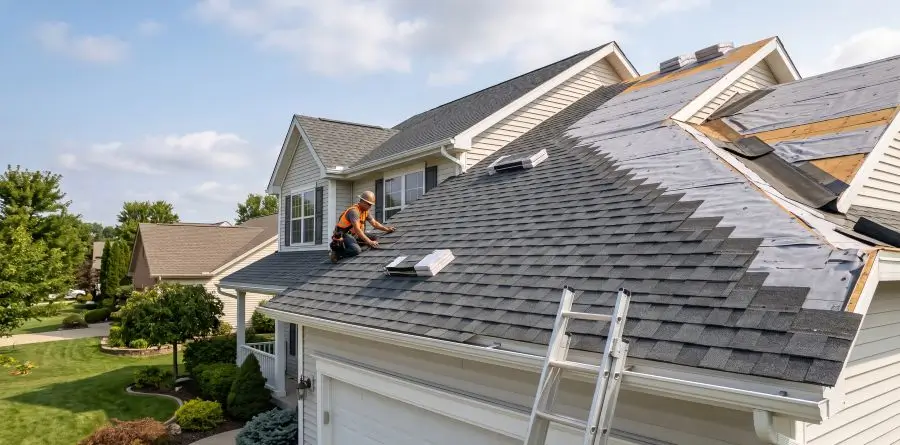
Most homeowners will replace only a few roofs during their lifetime.
Roofing contractors do it every day.
That difference in experience can make purchasing a roof feel overwhelming. Materials, warranties, ventilation, underlayment, flashing, contractors, estimates, and pricing can quickly turn what seemed like a simple project into a complicated decision.
It doesn’t have to be.
The goal isn’t to turn you into a roofing expert.
It’s to help you become an informed homeowner.
Start With the Most Important Question: Do I Actually Need a New Roof?
Not every roofing problem requires replacement.
A leak can sometimes result from damaged flashing, a small area of missing shingles, a pipe boot, or another repairable condition.
Age matters, but age alone doesn’t determine whether replacement is necessary.
A professional inspection should evaluate the overall condition of the roofing system and help you understand whether repair or replacement makes more sense.
Ask the contractor to show you what they’re seeing, preferably with photographs or video.
You shouldn’t have to accept “you need a new roof” without understanding why.
A Roof Is a System, Not Just Shingles
Homeowners naturally focus on the shingles because they’re the part of the roof they can see.
But a roofing system includes much more.
Depending on the home and project, components can include:
- Roof decking
- Underlayment
- Ice and water protection
- Starter shingles
- Field shingles
- Flashing
- Pipe and penetration components
- Ridge caps
- Ventilation
These components work together.
That’s why comparing estimates based solely on the brand or color of the shingle can be misleading.
Ask each contractor:
What complete roofing system are you proposing?
Understand Your Material Options
There are different roofing products at different price and performance levels.
For many residential projects, architectural asphalt shingles remain a popular option because they combine appearance, performance, availability, and value, upgraded products may offer different aesthetics, construction, or warranty options.
The most expensive product isn’t automatically the right choice.
The best choice depends on your home, budget, how long you expect to remain in the property, aesthetic preferences, and priorities.
A good contractor should explain the differences rather than simply pushing the highest-priced option.
Ventilation Matters
Your attic and roofing system interact.
Proper ventilation can help manage heat and moisture within the attic space. An improperly designed ventilation system can contribute to problems that homeowners may mistakenly attribute to the shingles themselves, ask whether your existing ventilation system is appropriate and whether changes are recommended as part of the project.
Understand the Warranty Before You Buy
The word “warranty” can sound reassuring.
But not all warranties cover the same things.
There may be separate warranties covering:
- Roofing materials
- Manufacturer defects
- Enhanced manufacturer coverage
- Contractor workmanship
Ask who provides each warranty, what it covers, how long coverage lasts, whether registration is required, and what exclusions apply.
Most importantly: ask for the warranty information in writing.
Don't Compare Estimates by Price Alone
Suppose three contractors give you three different prices.
That doesn’t necessarily mean you’re comparing the same roof.
One proposal may include components another excludes. Contractors may specify different materials, warranties, ventilation work, flashing procedures, disposal, permits, or workmanship coverage.
Before comparing prices, compare scope.
Ask:
What exactly is included? What isn’t?
What could result in an additional charge?
How will unforeseen decking damage or other conditions be handled?
A lower number isn’t necessarily a lower cost if important work has been omitted.
Research the Contractor
You’re not simply purchasing roofing materials.
You’re hiring a company to install a system designed to protect your home.
Before choosing a contractor, investigate:
- Licensing requirements applicable in your area
- Insurance
- Manufacturer credentials
- Reviews and reputation
- Written warranties
- Years in business
- How complaints are handled
- Who will manage the project
- How the property will be protected
- What happens after installation if you have a concern products matter.
Know What to Expect on Installation Day
Roof replacement is construction.
There will be noise, vehicles, materials, debris, and people working around your property.
Before installation, ask how you should prepare.
You may need to move vehicles, secure fragile items, make arrangements for pets, protect belongings in the attic, and provide contractors with appropriate access, ask how landscaping, siding, windows, driveways, and other areas of your property will be protected, knowing what to expect removes much of the stress from the process.
Ask How Changes Will Be Handled
Sometimes contractors discover conditions that couldn’t reasonably be seen before removing the existing roofing materials.
Damaged decking is a common example.
Before work begins, understand how unforeseen conditions will be documented, priced, communicated, and approved.
A professional process should minimize surprises.
Final Thought
The best roofing decision isn’t necessarily the cheapest roof or the most expensive roof.
It’s the decision you understand.
Take the time to learn about the condition of your existing roof, the proposed system, materials, warranties, contractor, scope of work, and price.
Ask questions. Request documentation. Compare complete proposals rather than isolated numbers.
A better home improvement decision starts with a more informed homeowner.
KEEP READING
More from the field
BUSINESS
Build Systems Before You Build Scale
5 MIN READ
HOMEOWNER EDUCATION
How AI Is Changing the Home Improvement Industry
3 MIN READ
Get the Field Report
New reports as we file them — franchising, systems and the numbers behind them.